
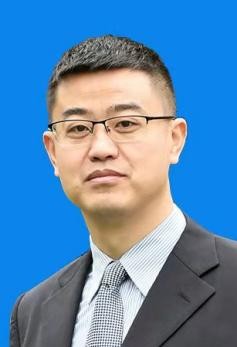
Junhui Zhao, IET Fellow, IEEE Senior Member, H-index 39
Beijing Jiaotong University, China
Biography
Junhui Zhao (Senior Member, IEEE) received the M.S. and Ph.D. degrees from
Southeast University, Nanjing, China, in 1998 and 2004, respectively. From 1998 to 1999, he was with
Nanjing Institute of Engineers, ZTE Corporation, Shenzhen, China. In 2004, he was an Assistant Professor
with the Faculty of Information Technology, Macau University of Science and Technology, Cotai, China, and
continued there as an Associate Professor, till 2007. In 2008, he was an Associate Professor with Beijing
Jiaotong University, where he is currently a Professor with the School of Electronics and Information
Engineering. He was a short term Visiting Scholar with Yonsei University, Seoul, South Korea, in 2004 and
a Visiting Scholar with Nanyang Technological University, Singapore from 2013 to 2014. Since 2016, he has
been with the School of Information Engineering, East China Jiaotong University, Nanchang, China. His
research interests include wireless and mobile communications and related applications.
Speech Title: Cooperative Perception and Communication Optimization for Autonomous Driving
Abstract: This talk addresses critical challenges in autonomous driving perception and vehicular
network communication. To overcome the limitations of single-vehicle perception—such as feature
degradation caused by occlusion and varying lighting conditions—as well as the coarse fusion and lack of
global correlation in multi-vehicle cooperative perception, we propose a series of novel methods. These
include an Enhanced Variational Perception Model, a Transformer-based Multi-Vehicle Cooperative Perception
approach, a Perception Network Adaptive to Communication Impairments, and a Bird’s-Eye View (BEV)-based
Visual-Assisted Beam Alignment scheme. The research scope progressively extends from monocular BEV
perception to multi-vehicle cooperative perception under lossy communication environments, ultimately
closing the loop with visual-assisted beam alignment technology. The proposed solutions effectively
enhance environmental perception accuracy, improve vehicular communication efficiency, and strengthen
overall system robustness in autonomous driving scenarios.
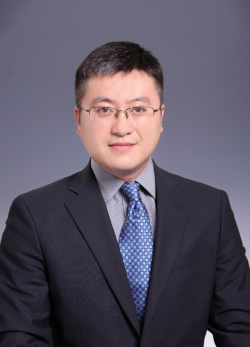
Feifei Gao, IEEE FELLOW, H-index 84
Tsinghua University, China
Biography
Feifei Gao (Fellow, IEEE) received the B.Eng. degree from Xi'an Jiaotong
University, Xi'an, China in 2002, the M.Sc. degree from McMaster University, Hamilton, ON, Canada in 2004,
and the Ph.D. degree from National University of Singapore, Singapore in 2007. Since 2011, he joined the
Department of Automation, Tsinghua University, Beijing, China, where he is currently a tenured full
professor.
Prof. Gao's research interests include signal processing for communications, array signal processing,
convex optimizations, and artificial intelligence assisted communications. He has authored/coauthored more
than 200 refereed IEEE journal papers and more than 150 IEEE conference proceeding papers that are cited
more than 18000 times in Google Scholar. Prof. Gao has served as an Editor of IEEE Transactions on
Wireless Communications, IEEE Journal of Selected Topics in Signal Processing (Lead Guest Editor), IEEE
Transactions on Cognitive Communications and Networking, IEEE Signal Processing Letters (Senior Editor),
IEEE Communications Letters (Senior Editor), IEEE Wireless Communications Letters, and China
Communications. He has also served as the symposium co-chair for 2019 IEEE Conference on Communications
(ICC), 2018 IEEE Vehicular Technology Conference Spring (VTC), 2015 IEEE Conference on Communications
(ICC), 2014 IEEE Global Communications Conference (GLOBECOM), 2014 IEEE Vehicular Technology Conference
Fall (VTC), as well as Technical Committee Members for more than 50 IEEE conferences.
Speech Title: Key Technologies and Prototype Design for Integrated Sensing and Communications
System
Abstract
In the future, millions of base stations (BSs) and billions of users (UEs) will natively build an
integrated sensing and communications (ISAC) system, which can utilize intelligent ubiquitous methods to
realize the ultimate goal of sensing, i.e., constructing the global mapping from real physical world to
digital twin world, while providing communications services at the same time. For this purpose, we conduct
a series of theoretical and technical researches on ISAC, in which we decompose the real physical world
into static environment, dynamic targets, and various object materials. The ubiquitous static environment
occupies the vast majority of the physical world, for which we design static environment reconstruction
(SER) scheme to obtain the layout and point cloud information of static buildings. The dynamic targets
floating in static environments create the spatiotemporal transition of the physical world, for which we
design comprehensive dynamic target sensing (DTS) scheme to detect, estimate, track, image and recognize
the dynamic targets in real-time. The object materials enrich the electromagnetic laws of the physical
world, for which we develop object material recognition (OMR) scheme to estimate the electromagnetic
coefficient of the objects. Finally, based on these theoretical researches, we build an ISAC hardware
prototype platform working in millimeter wave frequency band, realizing high-precision SER, DTS, and basic
OMR, which provides preliminary verification for building the digital twin for communications networks.

Yang Yue, SPIE Fellow, Optica Fellow, H-index 40
Xi'an Jiaotong University, China
Biography
Yang Yue received the B.S. and M.S. degrees in electrical engineering and
optics from Nankai University, China, in 2004 and 2007, respectively. He received the Ph.D. degree in
electrical engineering from the University of Southern California, USA, in 2012. He is currently a
Professor with the School of Information and Communications Engineering, Xi'an Jiaotong University, China.
He is the founder and current PI of Intelligent Photonic Application Technology Laboratory (iPatLab). Dr.
Yue’s current research interest is intelligent photonics, including optical communications, optical
perception, and optical chip. He has published >300 journal papers (including Science) and conference
proceedings with >14,000 citations, two books (Elsevier, Springer Nature), eight edited books, two book
chapters, >50 issued patents (including 30 U.S. patents and 6 European patents), >200 invited
presentations (including 1 tutorial, >30 plenary and >100 keynote talks). Dr. Yue is a Fellow of Optica
and SPIE. He is also among the Top 2% Scientists List Worldwide by Stanford University. He is an Associate
Editor for IEEE Access and Frontiers in Physics, Editor Board Member for four other scientific journals,
Guest Editor for >10 journal special issues. He also served as Chair for >100 international conferences,
Reviewer for >80 prestigious journals.
Speech Title: Optical Fibers for Orbital Angular Momentum Communications
Abstract: Optical communications, as the backbone of today’s telecommunications infrastructure,
supports voice, video and data transmission through global networks. One critical issue in its research is
the challenge of meeting the needs of increasing the data capacity. This talk presents high-speed optical
fiber communications employing orbital-angular-momentum multiplexing.
First, the basics of orbital angular momentum (OAM) and its traditional applications will be introduced.
As another newly explored dimension, spatial division multiplexing (SDM) has been demonstrated with the
great potential to tremendously increase the data capacity. The building blocks of OAM-based SDM system
will be discussed. Next, we will discuss the potential of using orbital-angular-momentum (OAM) modes for
spatial multiplexing in a ring fiber. Several types of ring-core optical fibers are presented for OAM
modes, including multi ring-core fiber supporting thousands of modes, coupled ring-core fiber with large
dispersion, and non-zero dispersion-shifted ring-core fiber to balance dispersion and nonlinearity.
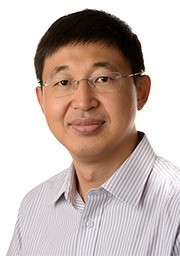
Yonghui Li, IEEE FELLOW, ARC Future Fellow, H-index 86
The University of Sydney, Australia
Biography
Yonghui Li is now a Professor and Director of Wireless Engineering Laboratory
in School of Electrical and Information Engineering, University of Sydney. He is the recipient of the
Australian Research Council (ARC) Queen Elizabeth II Fellowship in 2008, ARC Future Fellowship in 2012 and
ARC Industry Laureate Fellowship in 2025. He is an IEEE Fellow and Clarivate highly cited researcher. His
current research interests are in the area of wireless communications. Professor Li was an editor for IEEE
transactions on communications, IEEE transactions on vehicular technology and guest editors for several
special issues of IEEE journals, such as IEEE JSAC, IEEE IoT Journals, IEEE Communications Magazine. He
received the best paper awards from several conferences. He has published one book, more than 300 papers
in premier IEEE journals and more than 200 papers in premier IEEE conferences. His publications have been
cited more than 25000 times.
Speech Title: Beyond 5G towards a Super-connected World
Abstract
Connected smart objects, platforms and environments have been identified as the next big technology
development, enabling significant society changes and economic growth. The entire physical world will be
connected to the Internet, referred to as Internet of Things (IoT). The intelligent IoT network for
automatic interaction and processing between objects and environments will become an inherent part of
areas such as electricity, transportation, industrial control, utilities management, healthcare, water
resources management and mining. Wireless networks are one of the key enabling technologies of the IoT.
They are likely to be universally used for last mile connectivity due to their flexibility, scalability
and cost effectiveness. The attributes and traffic models of IoT networks are essentially different from
those of conventional communication systems, which are designed to transmit voice, data and multimedia.
IoT access networks face many unique challenges that cannot be addressed by existing network protocols;
these include support for a truly massive number of devices, the transmission of huge volumes of data
burst in large-scale networks over limited bandwidth, and the ability to accommodate diverse traffic
patterns and quality of service (QoS) requirements. Some IoT applications have much stringent latency and
reliability requirements which cannot be accommodated by existing wireless networks. Addressing these
challenges requires the development of new wireless access technologies, underlying network protocols,
signal processing techniques and security protocols. In this talk, I will present the IoT network
development, architecture, key challenges, requirements, potential solutions and recent research progress
in this area, particularly in 5G and beyond 5G.
P. Takis Mathiopoulos, H-index 46
University of Athens, Greece
Biography
P. Takis Mathiopoulos received the Ph.D. degree in digital communications
from the University of Ottawa, Ottawa, Canada, in 1989. From 1982 to 1986, he was with Raytheon Canada
Ltd., working in the areas of air navigational and satellite communications. In 1989, he joined the
Department of Electrical and Computer Engineering (ECE), University of British Columbia (UBC), Vancouver,
Canada, as an Assistant Professor and where he was a faculty member until 2003, holding the rank of
Professor from 2000 to 2003. From 2000 to 2014, he was the Director (2000 - 2004) and then the Director of
Research of the Institute for Space Applications and Remote Sensing (ISARS), National Observatory of
Athens (NOA). In 2014 he was appointed Professor of Telecommunications at the Department of Informatics
and Telecommunications, National and Kapodistrian University of Athens, Athens, Greece. He also held
visiting faculty long term honorary academic appointments as Guest Professor at Southwest Jiao Tong
University (SWJTU), Chengdu, China, and Guest (Global) Professor at Keio University, Tokyo, Japan. His
research activities and contributions have dealt with wireless terrestrial and satellite communication
systems and network as well as in remote sensing, LiDAR systems, and information technology, including
blockchain systems. In these areas, he has coauthored more than 150 journal papers published mainly in
various IEEE journals, 1 book (edited), 5 book chapters, and more than 160 international conference
papers. Dr. Mathiopoulos has been or currently serves on the editorial board of several archival journals,
including the IET Communications as an Area Editor, the IEEE Transactions on Communications, the Remote
Sensing Journal, and as Specialty Chief Editor for the Arial and Space Network Journal of Frontiers. From
2001 to 2014, he has served as a Greek Representative to high-level committees in the European Commission
and the European Space Agency. He has been a member of the Technical Program Committees (TPC) for numerous
IEEE and other international conferences and has served as TPC Vice Chair of several IEEE conferences. He
has delivered numerous invited presentations, including plenary and keynote lectures, and has taught many
short courses all over the world. As a faculty member UBC, he has been awarded an Advanced Systems
Institute (ASI) Fellowship as well as a Killam Research Fellowship. He is also the co-recipient of three
best international IEEE conference paper awards and has received by the IEEE Communication Society the
Satellite and Space Communication Technical Committee “2017 Distinguished Service Award” for outstanding
contributions in the field of Satellite and Space Communications.
Speech Title: A New Sensing Channel Modeling Approach Based on Ray Tracing and Stochastic
Abstract:Methods for Vehicle-to-Everything Applications
A new sensing channel modeling approach jointly considering ray-tracing (RT) and stochastic methods, to
accurate and efficient model sensing channels for vehicle-to-everything (V2X) applications is presented.
For the former, moving targets are modeled through accurate RT simulations while for the latter a
statistical approach is used for generating complex environmental clutter by emphasizing for the first
time individual object modeling. This approach is used to form a feature library of objects which ensures
space-time consistency while significantly improving the modeling speed. The channel transfer functions
generated by RT and stochastic methods are jointly considered through coherent superposition to form a
more complete sensing channel which includes both clutters and targets. To verify its effectiveness and
accuracy, a comprehensive experimental study has been conducted taking systematic measurements using a
77-GHz mmWave radar as it is the prevalent equipment for sensing used for intelligent driving
applications. We have considered a typical V2X scenario, with the radar deployed on vehicles traveling
along roads at an urban intersection. The experimental results obtained have demonstrated that the
accuracy in target distance detection and velocity estimation has improved leading to errors of less than
0.5 m and less than 0.2 m/s, respectively, while for clutter modeling, the error of power is 3 to 6 dB.
Moreover, compared to traditional RT methods, the proposed approach is 20 times faster. Through the
proposed approach, realistic sensing channel data can be obtained in a systematic, effective, and accurate
manner, facilitating research of sensing-assisted communication applications.
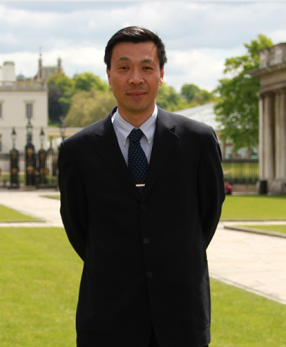
Jixin Ma, H-index 25
University of Greenwich, UK
Biography
Jixin Ma received the B.Sc. and M.Sc. degrees in mathematics in 1982 and
1988, respectively, and the Ph.D. degree in computer sciences in 1994.,He is a Full Professor of Computer
Science (Artificial Intelligence) and the Director of Ph.D./Postgraduate Research Programme with the
School of Computing and Mathematical Sciences, University of Greenwich, London, U.K. He has been the
Director of the Centre for Computer and Computational Science and the Lead of Artificial Intelligence
Research Group. He is also a Visiting Professor with Beijing Normal University, Beijing, China; Hainan
University, Haikou, China, Anhui University, Hefei, China, Zhengzhou Light Industrial University,
Zhengzhou, China, and Macau City University, Macau, China. He has published more than 200 research papers
in peer-reviewed international journals and conferences. His main research areas include artificial
intelligence, data science, and information systems, with special interests in temporal logic, information
security, machine learning, case-based reasoning, and pattern recognition.,Prof. Ma has been a member of
British Computer Society, American Association of Artificial Intelligence, ACIS/IEEE, World Scientific and
Engineering Society, and Special Group of Artificial Intelligence of BCS. He has also been the editor of
several international journals and international conference proceedings, Conference/Program Chair, and
invited keynote speakers of many international conferences.
Speech Title: Temporal Issues in Intelligent Computing
Abstract What, then is time?
If no one asks me, I know;
But if I want to explain it to a questioner, I don’t know.
The notion of time plays an important role in modelling natural phenomena and human activities concerning
the dynamic aspect of the real world. Virtually most information in the universe of discourse is
time-dependent and suitable methodologies are needed to deal with the rich temporal issues in
computer-based system, in particular in the domain of Artificial intelligence. Many Intelligent Computing
systems applications need to deal with the temporal dimension of Information, the change of information
over time and the knowledge about how it changes. Various areas in the domain of Intelligent Computing
require temporal representation and reasoning, including Knowledge Management, Decision Support,
Intelligent Systems, Database Management, Prediction, Planning, Historical Reconstruction, Diagnosis and
Explanation, etc. The purpose of this talk is to: (a) motivate and explain a topic of emerging importance
in Intelligent Computing; (b) provide an overview on some fundamental issues with respects to temporal
ontology; (c) present a brief introduction to temporal representation and reasoning in Intelligent
Computing in terms of some illustrating examples. It is hoped that this talk will raise some special
interests in representing and reasoning about the temporal aspects of information in the community of
Intelligent Computing.